Is Your AI Agent Moving the Bottleneck?
What an engine foundry taught me about getting value from AI

When I was starting out in consulting, a lot of my work involved building simulation models to support capital investment decisions. One client was an engine foundry that wanted to install a second sand hopper. We modelled the as-is process and ran the to-be simulations. The bottleneck shifted and throughput hardly increased.
I was young, and I took that initial result as the conclusion: the second hopper wasn't justified. Looking back, I realise our work was only the starting point. The single sand hopper was the primary constraint, and adding a second would relieve it. The real question was what would happen next.
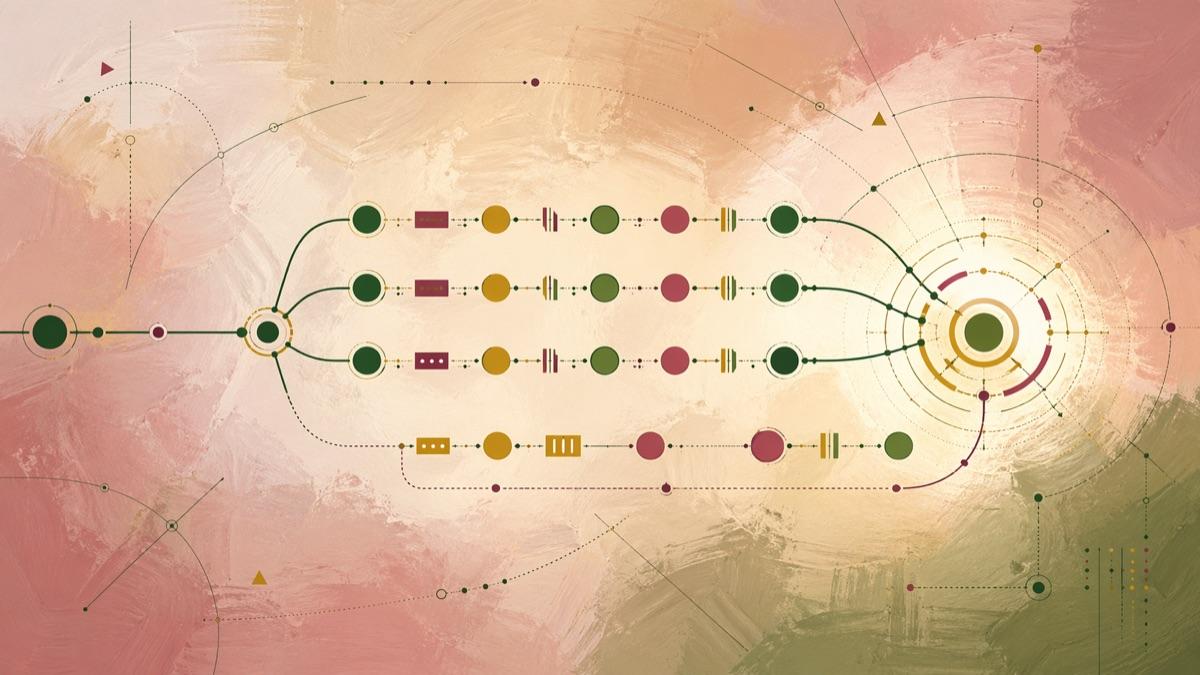
The sand hoppers sat in the middle of a web of connected processes (moulding, pouring, cooling, shakeout, finishing, cleaning, maintenance). Relieve one constraint in a system like that and the bottleneck simply moves to the next one. To increase throughput, the client needed to understand how this complex system behaved so they could work out how to redesign the process (buffer capacity, shift schedules, maintenance timings) so that a second hopper would actually pay off. Our model gave them that as-is understanding, and a way to test any redesign before committing to it.
What I appreciate now, more than I did then, is that the client looked at every process connected to the hopper, not just the hopper itself. They first found out how the plant worked, then used that to decide what else had to change for a second hopper to significantly increase throughput.
Now Imagine the Sand Hopper Is an AI Agent
I was at the Women in Process Mining London event last week, where one of the speakers shared the figures from McKinsey's State of AI survey. Nearly nine in ten organisations now use AI somewhere in the business. Only 37% can point to any effect on their earnings, and just 6% are seeing significant value.
What is different about that 6%? Nearly three-quarters of them have fundamentally redesigned workflows because of AI. Among everyone else it's only a quarter.
I sat in that talk and thought about that sand hopper.
An AI agent is usually brought in to speed up one step: drafting replies to customers, matching invoices, sorting incoming service requests. Very often it does exactly that. But if the step after it can't cope with the extra work, the queue just moves, and the business doesn't get any faster. Look at the agent in isolation and it's exciting to see how much work it's doing. Look at the system as a whole and it might not be moving the needle at all.
Gartner expects over 40% of agentic AI projects to be cancelled by the end of 2027, citing escalating costs, unclear business value and inadequate risk controls. Not all of that comes down to process. But unclear business value is what you'd expect when an agent is judged on the step it speeds up rather than the outcome for the business as a whole.
Where Process Mining Fits
Another speaker walked us through how they're working with clients to bring in agentic AI properly: use process mining first to understand how the process runs today, find the constraints, design an agentic to-be process rather than bolting agents onto the old one, and measure the result end to end.
It is exactly the same approach that foundry used 20 years ago. But in the race to get AI in, most organisations are skipping straight to the agents without working through these steps.
Process mining speeds up the first of those steps, understanding the as-is process. It connects the objects and events your systems quietly record and rebuilds how work flows from start to finish across that web of interconnected processes.
Once you have this as-is model, the people redesigning the process can work off facts rather than opinions: how much work arrives at each step, which deviations are acceptable and need to be catered for, and where the current pain points are. The redesign might still happen through workshops and change management, but now it is grounded in the reality of how your processes run.
Process mining can then be used to monitor and measure the change. The same data and approach can be used in real time to determine how things are working after your AI agent has been deployed, as I described in Process Mining on the Factory Floor.
Agents Leave Data Behind Too
Every action an AI agent takes is recorded with a timestamp, so agents can appear on the same process map as the people and systems they work with.
That means you can see the agent as part of the process, not a black box beside it. How often does someone have to correct the output? How long does the output sit before anyone picks it up? Where does work get handed back to a person?
If you're implementing agents, you need this view to know whether your agent is working as designed and delivering the business benefits you expected.
Final Thought
I didn't realise it at the time, but the most valuable thing that foundry project produced wasn't a yes or no on the second sand hopper. It was a model that helped them understand how to redesign their process so that the second hopper would deliver the throughput they needed.
Most companies investing in AI agents are skipping that upfront work. The 6% seeing the benefits are not.
Sources
- McKinsey, The state of AI in 2026: On the road to ROI (August 2026)
- Gartner, Gartner Predicts Over 40% of Agentic AI Projects Will Be Canceled by End of 2027 (June 2025)
Frequently Asked Questions
Work flows through a web of connected steps. If an agent speeds up one step but the next step can't absorb the extra work, the queue simply moves downstream and end-to-end throughput barely changes. The agent looks productive in isolation while the outcome for the business stays the same.
According to McKinsey's State of AI survey, only 6% of organisations are seeing significant value from AI. Nearly three-quarters of that group have fundamentally redesigned workflows because of AI, compared with about a quarter of everyone else.
Process mining rebuilds how work actually flows from the events your systems already record, so a redesign can be based on facts: how much work arrives at each step, which deviations matter and where the pain points are. After deployment, the same data shows the agent on the process map alongside people and systems, revealing how often its output is corrected, how long it waits and where work is handed back to a person.
Enjoyed this article?
Subscribe to our LinkedIn newsletter to get notified when we publish something new.
Subscribe on LinkedIn